
Why Maids Quit Without Notice in India — And What You Can Actually Do About It
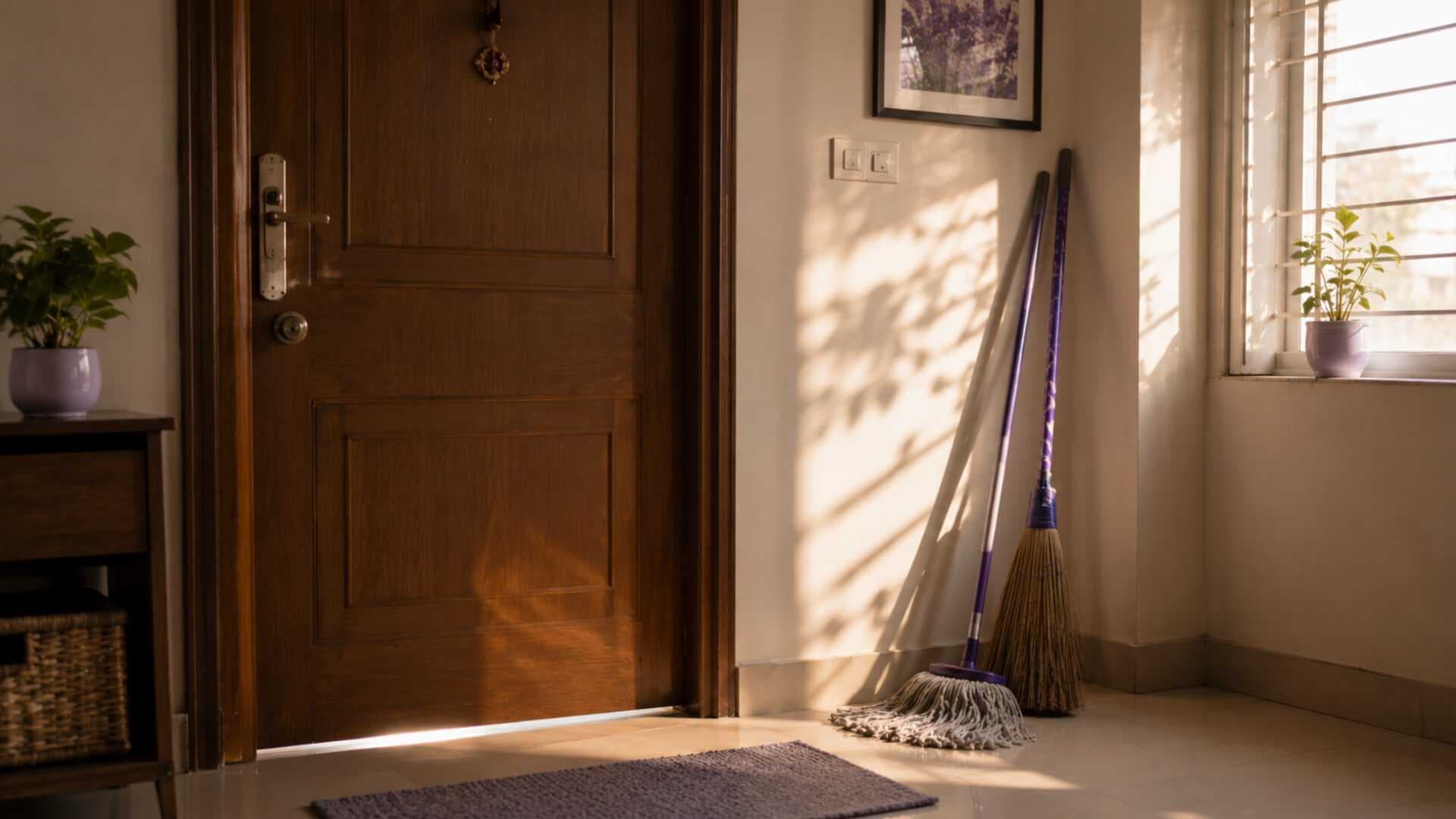
She was fine on Monday. Tuesday she came, did the dishes, left at the usual time. Wednesday — nothing. No message. No missed call. Just the broom exactly where she left it and the assumption that today, somehow, would be different.
It was not.
If this has happened to you once, you probably blamed her. If it has happened three or four times across different people, you have probably started wondering whether the problem is something else entirely. You are right to wonder. Because in most cases, what looks like a sudden exit has been building quietly for weeks. The leaving was not impulsive. The silence was.
- Nobody Actually Leaves Without a Reason
- The Real Reasons — Not the Comfortable Version
- What Families Try That Mostly Does Not Work
- What Actually Changes Things
- The Part Nobody Says
- Frequently Asked Questions
Nobody Actually Leaves Without a Reason
Here is the thing people rarely say out loud: domestic helpers in India do not disappear because they are irresponsible. They disappear because the arrangement gave them no other exit.
There is no HR department. No notice period clause anyone actually enforces. No conversation where she could say "this is not working" without risking her income, her reference, and a very uncomfortable morning for everyone involved. So she says nothing. Until she says nothing permanently.
That does not make it less frustrating. It makes it more important to understand.
The Real Reasons — Not the Comfortable Version
The job quietly became twice the job. This one is the most common and the least discussed. A helper is hired to sweep, mop, and do dishes. Fine. Then the second bathroom gets added. Then the balcony. Then "just the clothes, only when you have time" — which somehow becomes every day. Each addition feels small from the employer's side. Cumulatively, it is a different job. Same pay, more work, no conversation about either. She does not raise it. Raising it requires courage she may not feel she has with the person who pays her. So she absorbs it, and absorbs it, until one Wednesday she simply does not come back.
Pay came late. Again. Consistent, on-time payment is not just a financial matter. It is a signal. When salary comes on the first of the month, it says: I take this arrangement seriously. When it comes on the eighth, after being asked twice, it says something else. Most helpers work across multiple households. They have their own rent, their own grocery bills, their own lives that depend on predictable income. Irregular payment does not just inconvenience them. It makes them start looking for employers who are more reliable.
She felt watched in a way that felt like suspicion. This one is uncomfortable to talk about because it requires families to look at their own behaviour. But the research is consistent — helpers who feel constantly monitored, whose bags are checked, who are questioned when things go missing without evidence, stop wanting to return to that environment. Reasonable precautions are one thing. But there is a line between sensible awareness and an atmosphere that communicates distrust. People notice the difference. And they remember it every morning when they decide whether or not to come.
Her schedule at your house stopped working with her other houses. Most part-time maids work three, four, sometimes five households in a day. They operate on timing that has been negotiated and balanced across all of them. When one employer starts running late regularly, or asks her to stay longer without checking, or changes the timing week to week — it does not just affect that house. It affects everything after it. She will not explain this to you. She will just find an employer whose timing is more predictable.
She found something better. This is the most straightforward reason and also the one families find hardest to accept. Domestic helpers, like anyone else doing a job, take better opportunities when they find them. A family in the next building paying more for fewer tasks. A live-in arrangement. A platform where she earns consistently without depending on a single family's mood. These opportunities come up. People take them. This is not disloyalty. It is basic economic behavior. The same thing you would do.
What Families Try That Mostly Does Not Work
Finding someone "more loyal." Loyalty is not a personality trait you can screen for during a ten-minute first meeting. It is an outcome — what happens when an arrangement is clear, fair, and consistent over time. Searching for a loyal person rather than building a loyal arrangement is why the cycle keeps repeating.
Paying more without changing anything else. A higher salary helps with one reason — a better offer elsewhere. It does nothing for scope creep, irregular pay timing, or an uncomfortable atmosphere. People have left well-paying arrangements because they felt disrespected. Money is not the whole story.
Hiring through the same informal channel again. Another neighbour's reference. Another WhatsApp contact. The new person starts with none of the clarity the last one left without. Three months later, the pattern repeats.
What Actually Changes Things
Be explicit at the start. Not a formal contract — just a direct conversation. What rooms. Which tasks. How long. What counts as extra. What the pay is and when it comes. Fifteen minutes at the beginning prevents months of friction.
Pay on a fixed date. Not whenever it is convenient. Not after being reminded. A fixed date, every month. This is the single highest-return change most families can make.
Ask once in a while if something is not working. She will not volunteer it. But if you create space for the conversation — genuinely, not performatively — you will occasionally catch something before it becomes a reason to leave.
And practically speaking: stop depending entirely on one person. Even with the best arrangement, helpers get sick, have family emergencies, take up better offers. When your entire morning routine sits on one person showing up, any disruption becomes a crisis.
Platforms like Snibto exist specifically for this. A police-verified Expert, available within ten minutes of booking, for a trial at Rs.29. Not a replacement for a good regular arrangement — a backup for when that arrangement breaks, which it will, because all arrangements do eventually.
The Part Nobody Says
Most families in India relate to domestic help the way they relate to a subscription service. When it works, they barely notice. When it stops, they are inconvenienced and want it fixed immediately.
But the person on the other side of that arrangement is making daily decisions about whether this is worth continuing. She is weighing the salary against the scope, the reliability against the atmosphere, the predictability against the alternatives. She is doing this quietly, without telling you, because the arrangement gave her no structured way to do it out loud.
When she leaves without notice, she is not being unprofessional. She is using the only exit the arrangement made available to her.
The fix is not finding someone who will not do this. The fix is building an arrangement where no one needs to.
Frequently Asked Questions
Why do maids leave without giving notice in India? Most informal domestic help arrangements have no notice expectation, no formal terms, and no way for helpers to raise concerns safely. Leaving without notice is simply the easiest exit available to someone with limited leverage in an unstructured arrangement.
How can I keep my maid from quitting suddenly? Set expectations clearly at the start. Pay on a fixed date every month. Occasionally ask if something is not working — and mean it. None of this is complicated. It is just rarely done.
Is high maid turnover normal in India? Common, yes. Normal in the sense of inevitable — no. Households with clear arrangements and consistent treatment experience meaningfully lower turnover. It is not luck. It is structure.
What should I do immediately when my maid quits without notice? Book a Snibto session. A verified Expert arrives within ten minutes. No calls, no uncertainty, no waiting for someone who may not come. Then, separately, think about whether the arrangement you had is worth rebuilding — or worth redesigning.
Does paying more stop maids from quitting? It addresses one reason — a better offer elsewhere. It does nothing for unclear scope, atmosphere, or irregular pay timing. Salary matters. It is not the only thing that matters.
How quickly can Snibto send someone if my maid leaves? Within ten minutes of booking in most cases. Select your tasks, confirm the session, and the nearest available police-verified Expert is dispatched to your address. Trial slot starts at Rs.29.
Conclusion
Maids do not leave without reason. They leave without notice because notice was never made easy. Understanding the difference is what separates families who keep going through the cycle from those who eventually stop.
Need help right now? Book at snibto.com — Rs.29 for your first session.