
My Maid Keeps Taking Leave — What Are My Actual Options?
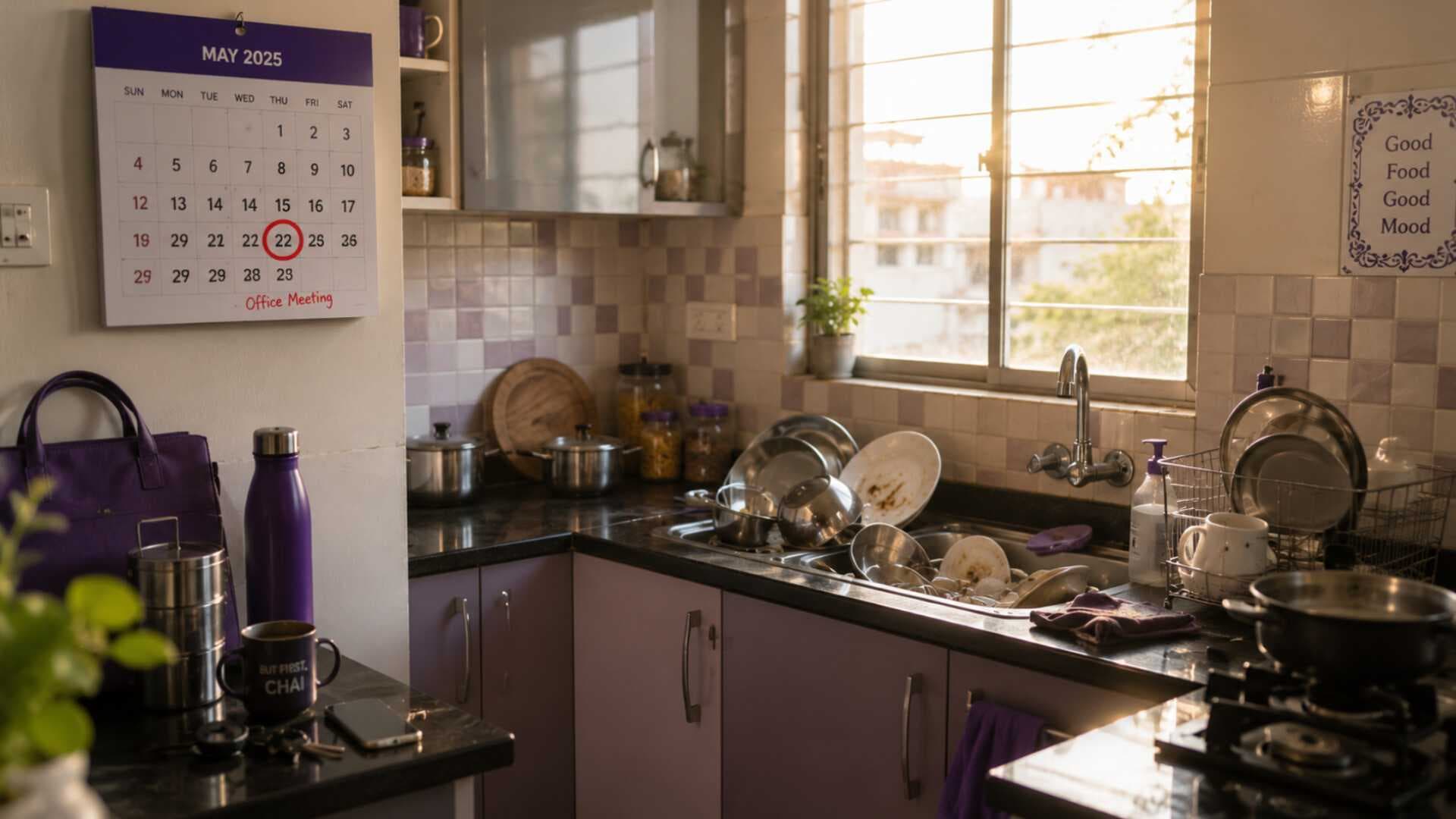
Third time this month. You checked. You actually went back and counted, because it started to feel like more than your imagination, and it was — three Mondays out of four, gone, no warning, dishes from the weekend still sitting there when you finally give up waiting and do them yourself before office.
You are not overreacting. This is a real, measurable problem, and it deserves a real answer instead of just "try a new maid and hope."
So here is an honest look at what your actual options are, starting with the one most people skip.
- First, Figure Out If It Is Actually "Frequent"
- Option One: Talk to Her Directly. Actually Talk.
- Option Two: Stop Depending on One Person Entirely
- Option Three: Restructure the Arrangement Itself
- Option Four: Accept a Hybrid Model
- What Does Not Actually Work
- Frequently Asked Questions
First, Figure Out If It Is Actually "Frequent"
Before doing anything else, it helps to separate genuine excessive leave from normal life happening to a person who also has a family, a commute, and occasional illness.
One sick day a month is not a red flag. A festival here and there is expected — Durga Puja, Holi, family weddings, these come up for everyone. What is worth addressing is a pattern — leave without any warning, more than twice a month, with no explanation offered even when you ask directly.
If you are seeing the second pattern, you are dealing with something structural, not bad luck. And structural problems need structural fixes, not just a replacement person who will likely develop the same pattern within a few months.
Option One: Talk to Her Directly. Actually Talk.
This sounds almost too simple to write down, but most families skip it entirely and go straight to either tolerating the problem silently or quietly planning to replace her.
A direct, non-confrontational conversation — something like "I have noticed you have been taking leave more often recently, is everything okay, is there something about the schedule that is not working" — does two things. It signals you have noticed, which matters, because most helpers assume employers either do not notice or do not care. And it surfaces something fixable. Maybe her child started school and the morning timing genuinely does not work anymore. Maybe she picked up another household whose schedule conflicts. Maybe nothing is wrong and she is simply testing what she can get away with — in which case, you now know that too. This conversation will feel awkward the first time. It gets easier, and it is almost always more useful than people expect going in.
Option Two: Stop Depending on One Person Entirely
Here is the uncomfortable truth most families resist accepting: if your entire household routine depends on one individual showing up every single day without fail, you have built a fragile system. Not because she is unreliable in some deep character sense, but because that is simply how single points of failure work, in any system, with any person.
The fix is not finding someone more reliable. It is building redundancy so that one person's absence does not derail your morning.
This is where on-demand platforms like Snibto change the equation in a way that a second backup maid arrangement never quite does. You do not need a second person on a monthly retainer just in case. You book a verified Expert through the app exactly on the days you need one — when your regular maid is out, when you have guests, when you simply need extra help that week. A trial slot is Rs.29 for thirty minutes; a full hour is Rs.49. No commitment, no second salary to manage, no awkward situation where you are paying two people for overlapping work.
Families who adopt this approach describe something simple but real: the leave stops feeling like a crisis. It becomes mildly inconvenient instead of disruptive, because there is always a plan B that takes ten minutes to activate.
Option Three: Restructure the Arrangement Itself
Sometimes the leave pattern is a symptom of an arrangement that was poorly designed from the start. If your maid is covering five households a day and yours happens to have the least predictable timing, you are likely to lose more days to her schedule conflicts than a family with more flexible expectations.
Consider whether a slightly higher hourly rate in exchange for more predictable timing might actually reduce leave. Some families find that paying per visit, rather than a flat monthly salary regardless of attendance, naturally improves attendance — because both sides feel the connection between showing up and earning more clearly than a fixed salary communicates it.
This will not work for every relationship, and it requires a conversation most families are not used to having with domestic help. But for arrangements that have become unstable, restructuring the terms is often more effective than simply hoping the next person will be different.
Option Four: Accept a Hybrid Model
A growing number of households, particularly younger families and dual-income couples, are quietly moving away from the single full-time maid model entirely and toward a hybrid — a trusted helper for the bulk of daily work, combined with on-demand booking for the gaps.
This is not about replacing your maid. It is about not needing her to be perfect. She takes leave sometimes. Everyone does. The difference is whether her leave becomes your emergency or just a Tuesday that looks slightly different than usual.
What Does Not Actually Work
Switching maids repeatedly, hoping each new one will somehow be more reliable than the last, rarely solves the underlying issue — because the underlying issue is usually about how the arrangement itself is structured, not about any individual's character.
Going several months without a backup plan and simply absorbing the disruption each time, which is exhausting and unsustainable, especially for working parents.
Paying significantly above market rate hoping money alone buys reliability, when in reality predictability and respect tend to matter just as much as the number on the salary.
Frequently Asked Questions
How much leave is normal for a part-time maid in India? One to two days a month for genuine reasons — illness, family events, festivals — is typical and reasonable. More than that, especially without explanation, usually points to a deeper issue worth addressing directly.
Should I confront my maid about taking too much leave? A calm, direct conversation, not a confrontation, is usually the right first step. Asking if specific reasons are causing the pattern often surfaces a fixable issue rather than assuming carelessness.
What is the fastest way to get help when my maid is suddenly absent? On-demand platforms like Snibto can have a verified Expert at your door within ten minutes of booking, making them the fastest practical backup compared to calling around for a replacement.
Is it normal to use two domestic help arrangements at once? Increasingly, yes. Many households now combine a regular trusted helper with on-demand booking for backup, rather than relying entirely on one person's daily attendance.
Will paying my maid more reduce her leave? It can help if leave is driven by seeking better-paying opportunities elsewhere, but it does little if the leave is caused by scheduling conflicts, family circumstances, or an uncomfortable working arrangement.
Conclusion
Frequent unexplained leave is frustrating, but it is rarely unsolvable. The households that stop feeling powerless about it are usually the ones that stopped depending entirely on one person and built a system instead.
Need help today? Book a verified Expert at snibto.com — Rs.29 for your first session.