
How Much Should You Actually Pay Your Maid in 2026?
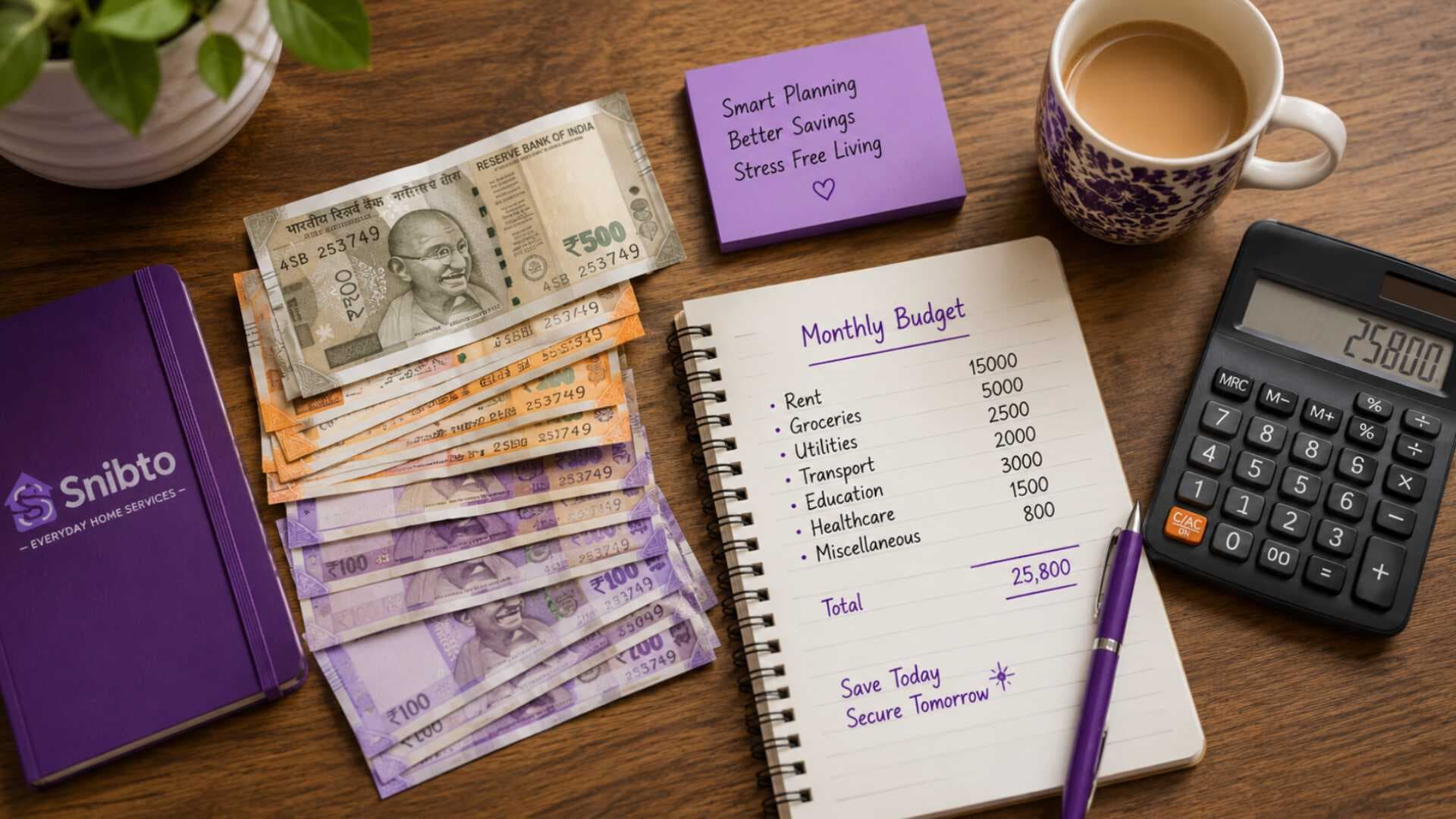
Somebody at a kitty party tells you they pay their maid Rs.2,000. Your building WhatsApp group has someone complaining theirs wants Rs.4,500. You are paying Rs.2,800 and have no idea if that is fair, too much, or honestly a bit low for what she does.
This confusion is not because you are bad at this. It is because there is no actual standard. No published wage chart that everyone follows. What you pay depends on your city, your tasks, your helper's experience, and frankly, how the original conversation went three years ago when you first hired her.
Let us actually work through this properly.
- Why There Is No Single Right Number
- What Families Are Actually Paying — A Realistic Range
- The Part Nobody Calculates: Cost Per Hour Actually Worked
- What Pushes Pay Higher — And Should
- A Practical Way to Land on a Fair Number
- When You Need an Alternative to the Monthly Math Entirely
- Frequently Asked Questions
Why There Is No Single Right Number
A maid's salary in India is shaped by at least five things happening at once — and most families only think about one or two of them.
Location matters more than people admit. A helper doing the same exact work in South Delhi will earn differently than one in a tier-2 town in West Bengal. Cost of living, local demand, and what other families in the area are paying all feed into the number. There is no national rate. There are local rates, and they vary a lot.
Scope is doing more work than the title suggests. "Part-time maid" can mean forty minutes of dishwashing or two hours covering mopping, dishes, laundry, and dusting. The job title tells you almost nothing. The actual task list is what determines fair pay, and most families never wrote that list down — they just let it grow.
Experience and trust accumulate value over time. A helper who has worked in your home for four years, knows your routines, can be trusted with the house keys, and never needs supervision is worth more than someone starting fresh. This is rarely formalized as a raise schedule. It just sort of happens, or it does not.
Number of households matters too. A maid working five houses a day for one hour each is running a small business of sorts — her income depends on packing in enough households without conflicts in timing. Her rate per house reflects that math, even if she never explains it that way.
And then there is simply what the market will bear. If domestic help is scarce in your area, rates go up regardless of what feels "fair" in the abstract. If there are more helpers than households looking, the dynamic shifts the other way.
What Families Are Actually Paying — A Realistic Range
Based on what is typically reported across Indian cities for 2026, here is a grounded picture. These numbers assume a helper working roughly one to two hours daily, six days a week, covering basic tasks like sweeping, mopping, and dishwashing.
Metro cities (Mumbai, Delhi, Bangalore, Pune): Rs.2,500 – Rs.5,000 per month for basic tasks. Add laundry or cooking assistance and this climbs toward Rs.4,000 – Rs.7,000.
Tier-2 cities (Asansol, Nashik, Indore, Coimbatore range): Rs.1,500 – Rs.3,500 per month for the same basic scope. The gap with metros is real but has been narrowing.
Smaller towns: Rs.1,000 – Rs.2,500, though informal arrangements here often involve in-kind elements — food, old clothes, festival gifts — that complicate a clean cash comparison.
These are not official figures. There is no government wage board most families consult. They are aggregated from what gets discussed openly across forums, building groups, and domestic help platforms tracking what users actually pay.
The Part Nobody Calculates: Cost Per Hour Actually Worked
Here is where the math gets interesting, and where most people's intuition about "fair pay" breaks down.
Say you pay Rs.2,500 a month for a maid who works roughly twenty-six days. That looks like about Rs.96 a day. Sounds reasonable for an hour of work.
Except she does not actually show up twenty-six days. Across a typical month, with festival leave, sick days, and the occasional unannounced absence, she might genuinely work twenty-one or twenty-two days. Suddenly the effective rate per day worked is closer to Rs.114 or Rs.119 — not Rs.96.
This is not a criticism of anyone. It is simply what the real numbers look like once you account for how informal arrangements actually run. Most families never do this calculation. They just feel vaguely that they are paying enough, or not enough, without the actual figure in front of them.
What Pushes Pay Higher — And Should
A few things reasonably justify paying above the local average, and recognizing them tends to build a more stable arrangement.
Working with elderly family members or young children, where additional care and attention is involved beyond the listed tasks. Handling cooking, which requires more skill and trust than cleaning alone. Working in homes with pets, which adds time and sometimes complexity. Being asked to come on Sundays or holidays when most helpers in the area are off. Having access to the house when no one else is home, which represents a level of trust worth compensating.
None of these are obligations. But families who account for them tend to keep helpers longer, and turnover — as anyone who has gone through it knows — has its own real cost.
A Practical Way to Land on a Fair Number
Skip the abstract debate and do this instead. Ask two or three neighbours doing similar work scope what they pay — not to copy them exactly, but to understand the local range.
Write down the actual task list you expect, honestly, not the optimistic version. Add 10 to 15 percent above the bare minimum local rate if the arrangement involves any of the trust factors mentioned above. And revisit the number once a year, proactively, rather than waiting for her to ask — because by the time she asks, she has usually already been thinking about leaving for a while.
When You Need an Alternative to the Monthly Math Entirely
Some families, especially with unpredictable schedules or those who simply do not need daily help, are increasingly skipping the fixed monthly salary model altogether.
On-demand platforms like Snibto charge per session rather than per month — a trial slot is Rs.29 for thirty minutes, a full hour is Rs.49.
For a household that needs help three days a week rather than six, this often works out cheaper than a fixed monthly salary, while removing the entire question of fair wage calculation, leave management, and annual negotiation. You pay for what you use. Nothing more.
It is not the right fit for everyone — some families genuinely value the continuity of one trusted person who knows their home over years. But for many, especially younger households or those new to managing domestic help, it sidesteps a question that, as this article has hopefully shown, does not actually have one clean answer.
Frequently Asked Questions
What is the average maid salary in India in 2026? For basic part-time work of one to two hours daily, six days a week, the range is roughly Rs.1,500 to Rs.5,000 depending heavily on city tier and task scope. Metro cities sit at the higher end; smaller towns at the lower end.
Should I pay my maid more during festivals? Most families give a festival bonus equivalent to half a month's salary to a full month's salary during major festivals like Diwali or Durga Puja. This is customary rather than mandatory but strongly expected in most arrangements.
How often should I increase my maid's salary? An annual review, even if the increase is modest, is generally expected. Many helpers do not ask directly and instead simply leave if they feel underpaid relative to the local market for too long.
Is it cheaper to use an on-demand service like Snibto instead of a monthly maid? For households needing help three to four days a week rather than daily, on-demand booking is often cheaper than a fixed monthly salary, since you only pay for sessions actually used.
What should be included in a fair maid salary calculation? Base tasks, additional responsibilities like cooking or elderly care, frequency of work, local market rate, and the trust level involved — such as having house keys or working unsupervised.
Conclusion
There is no single correct number for what a maid should earn. But there is a more honest way to arrive at one than guessing based on a kitty party conversation — and most families have simply never sat down and done the math.
Want flexibility instead of a fixed monthly commitment? Try Snibto at snibto.com — Rs.29 for your first session.